Feeding Cows on the Roadside: A Kind Act That Can Become a Road Safety Risk
Feed with Care, Keep Roads Safe

Feed with Care, Keep Roads Safe
Seeing a hungry cow or another animal on the street can touch our hearts. Many people want to help by offering food, vegetables, bread, or other leftovers. Feeding animals is often an act of kindness—but where and how we feed them matters.
When food is placed on busy roads, highways, intersections, or roadside areas, cows and other animals may gather in the middle of traffic. What starts as an act of compassion can quickly become a danger for animals, pedestrians, cyclists, and vehicle drivers.
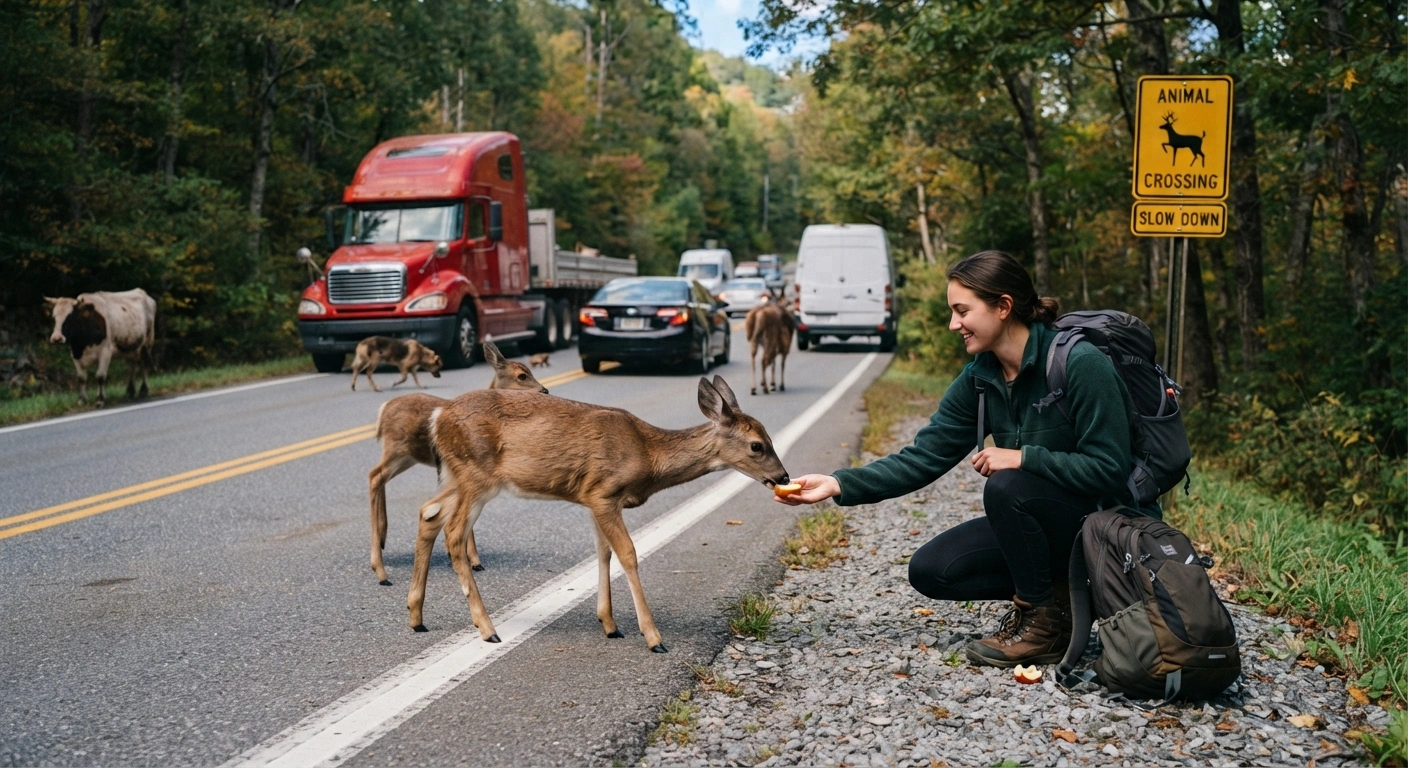
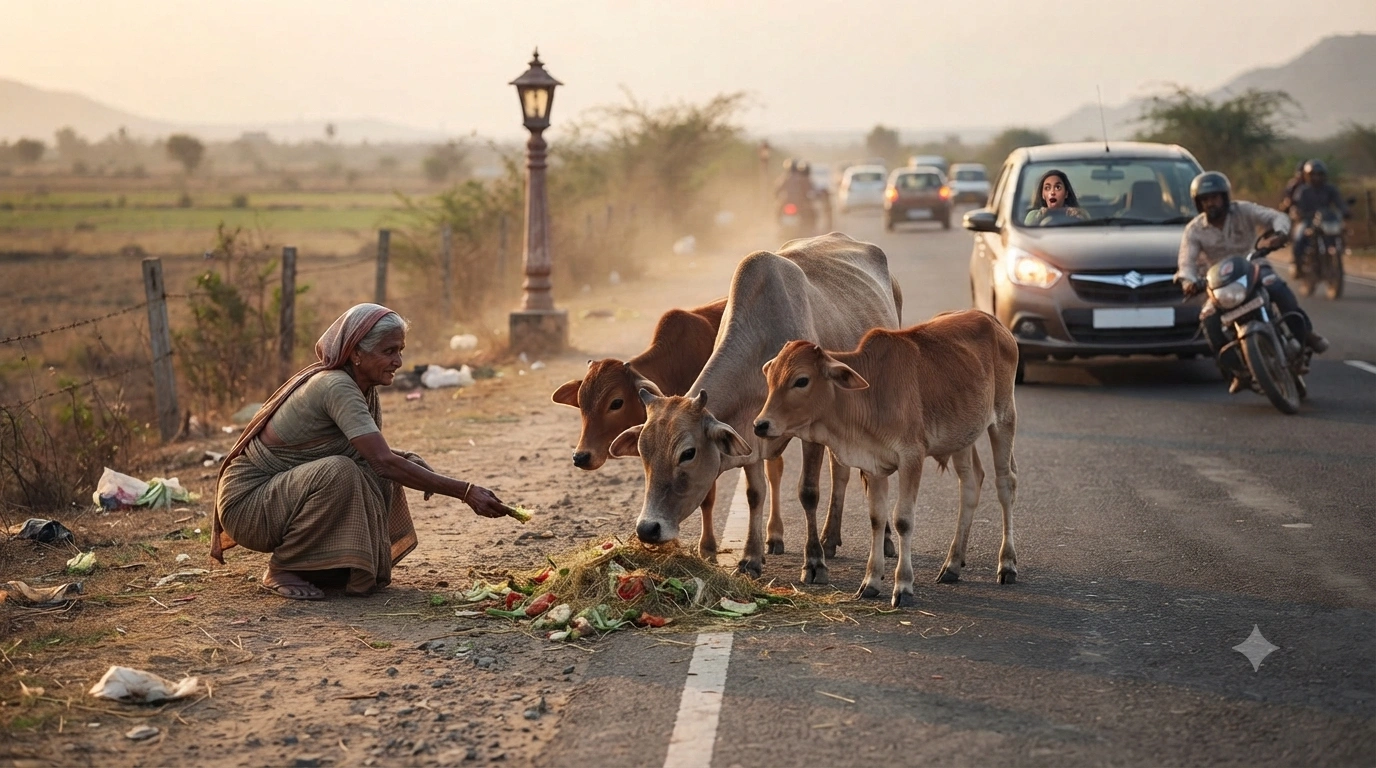
In many towns and cities, it is common to see people stopping their vehicles to feed cows along the roadside. Sometimes food is thrown onto the road itself, encouraging animals to move toward passing traffic.
A cow may suddenly walk onto the road when it sees food. Drivers may have only a few seconds to react. A sudden brake, sharp turn, or attempt to avoid an animal can result in:
The risk becomes even greater at night, during rain, or on roads where vehicles are travelling at high speed.
Roadside feeding does not only put humans at risk—it can put the animals we are trying to help in danger.
Cows attracted to food may remain near busy roads for long periods. They may lie down on the road, cross unexpectedly, or stand between moving vehicles.
A frightened cow can suddenly run in any direction. A driver trying to avoid it may lose control of the vehicle, while the animal itself may be hit by another vehicle.
If we truly care about animals, keeping them away from dangerous traffic should also be part of that care.
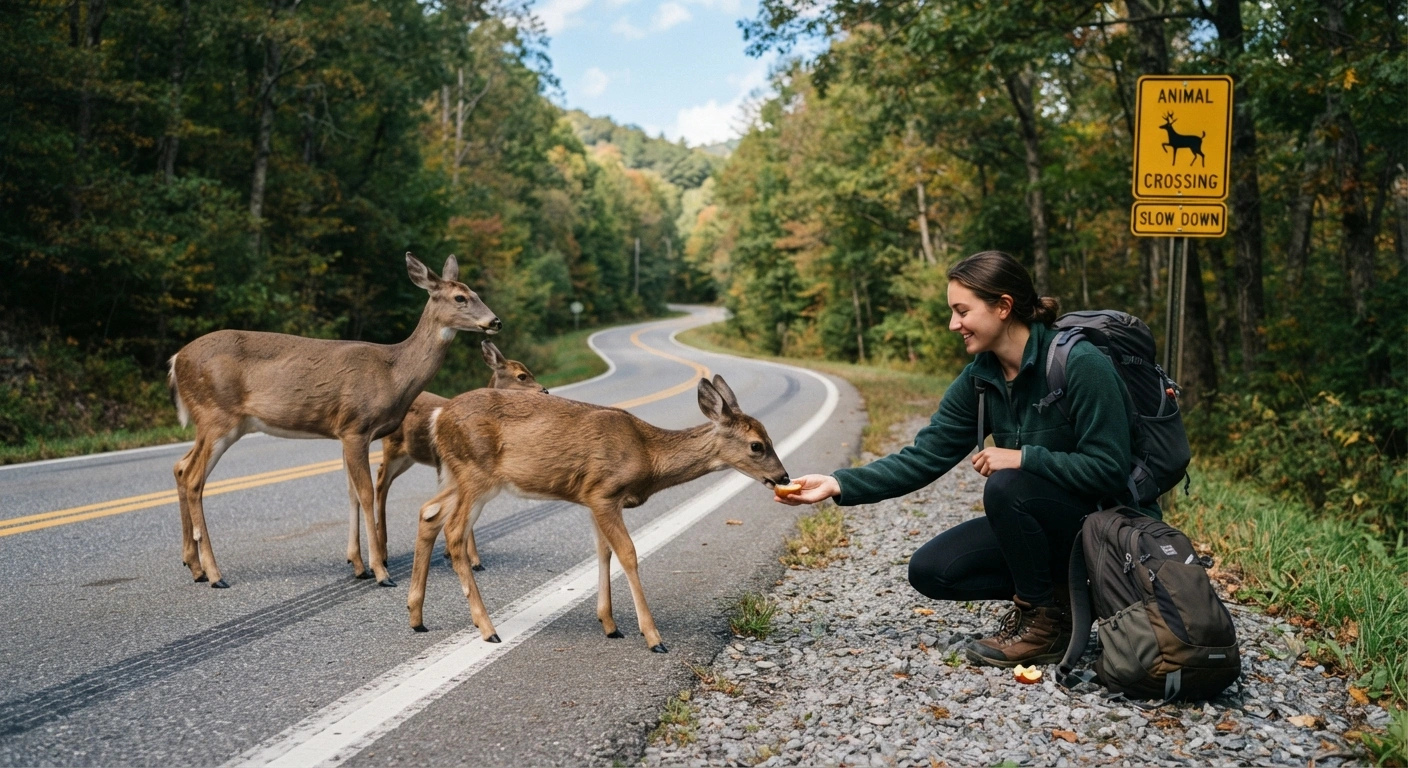
There is an important difference between feeding an animal and feeding an animal in an unsafe location.
Instead of throwing food onto a road or placing it beside a busy traffic lane, people can choose a safer location away from moving vehicles.
For example:
These simple changes can make a big difference.
Another common problem occurs when drivers suddenly stop their vehicles to feed cows.
Even if the person is trying to do something good, stopping in an unsafe location can surprise vehicles behind them. A following driver may not have enough time to brake.
If you want to feed an animal while travelling, find a safe place to park first. Never put yourself, the animal, or other road users in unnecessary danger.
Roadside feeding can create another problem: food waste.
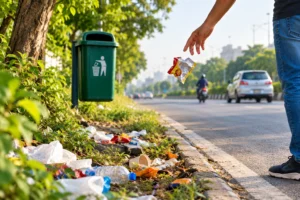
Leftover vegetables, plastic bags, food wrappers, and other waste may accumulate where animals gather. Cows can accidentally eat plastic along with food, while the waste can also block drains and make public spaces dirty.
Feeding animals responsibly means thinking beyond the moment of giving food.
Give food safely. Keep the area clean. Never leave plastic behind.
Helping animals does not mean ignoring road safety.
If you see a cow or another animal near a busy road, you can help by encouraging it toward a safer area rather than attracting it into traffic with food.
Communities can also work together to create safe feeding points away from busy roads and encourage responsible animal care.
Local authorities, animal welfare organisations, shopkeepers, residents, and drivers all have a role to play.
We often think of road accidents as the result of speeding or careless driving. But unexpected animals on the road can also create dangerous situations.
One person throwing food onto the roadside may seem harmless. But when many people do it every day, animals can begin gathering at the same dangerous locations.
A few seconds of convenience can create a risk that lasts for hours.
Before feeding an animal, take a moment to ask:
Is this a safe place for the animal, for me, and for everyone using this road?
If the answer is no, choose a safer location.
We should never stop caring for animals. Instead, we should learn to care for them responsibly.
Feeding a hungry cow is a kind gesture. Feeding it away from traffic is an even more responsible one.
Let’s make our roads safer for everyone—people and animals alike.
One simple change in our habits can help prevent accidents and save lives.










Paste a link from our active partner sites in the box below to make a link.

No profit is applicable on orders placed through the merchant’s app, except for Flipkart.
Add this site to your Home Screen for faster access
✕